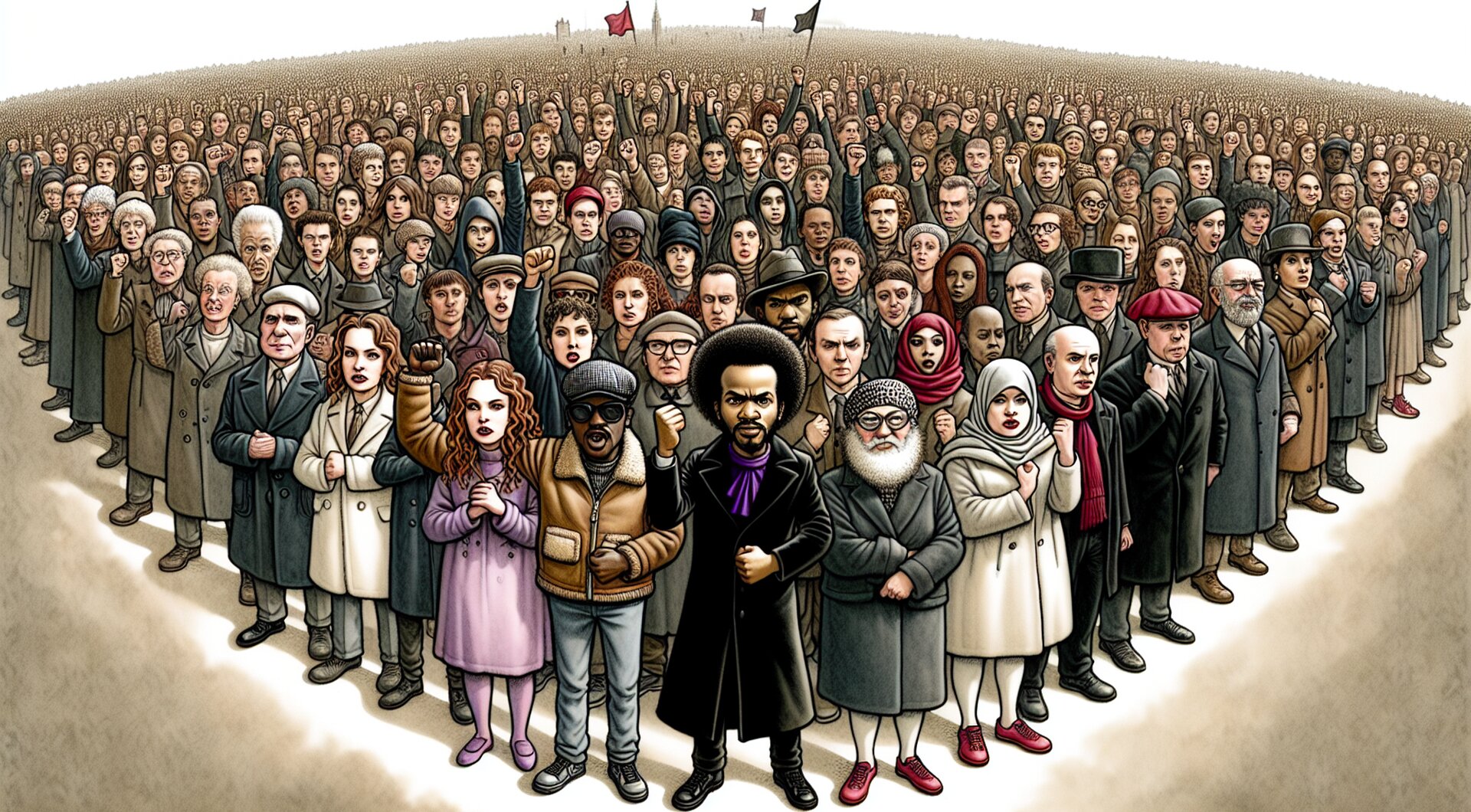
The social contract is a theory about why political authority is legitimate: people either actually or hypothetically agree to live under shared rules in exchange for protection, order and personal rights. Its scope is broad enough to explain obedience to government, civil rights, majority rule and the moral duties citizens owe one another.
Social contract theory tries to answer three big questions: where society comes from, why government has authority and what makes laws binding.
THE BASIC IDEA
Imagine a thought experiment: people living with no government at all. Why would they agree to give up some freedoms and follow rules? What would that agreement look like and what would it owe them in return? Will people agree, explicitly or implicitly, to form societies and governments in exchange for order and protection?
THE SOCIAL CONTRACT ASSUMES THAT
If you work hard and do the right thing in society, you should be able to progress and be successful in life. If we combine positive qualities like human rights, equality under the law, personal responsibility and others, we can track rules backward, optimize for fairness and the common good to compile a contract with the rules that should govern society.
SCOPE AND LIMITATIONS
The theory has important limits because it is often hypothetical rather than historical, so it explains legitimacy more than it describes real events. It also depends on assumptions about consent, rationality and equality that may not fit how many societies actually work, especially where power is unequal or consent is not freely given.
• A contract between the government and the governed, eg. those who live or can vote in the area governed, no foreigners, no tourists, etc. • Feasible, realistic and sustainable, eg. no idealistic solidarity, unlimited welfare, wild promises, free everything, etc. • Minimum Common Denominator for social agreement so that normal and rational humans will find hard to reject. • No controversial rights or obligations, eg. no trans-gender rights, no death penalty, etc. (these might be legitimate human rights or socially agreed terms but no part of the social contract itself). • Self-imposed, the institutions are bounded by its laws with very limited and justified exceptions.
ASSUMPTIONS
At the core of the social contract is the idea that individuals surrender some liberty for security provided by the government, where the state promises to act in the best interest of citizens, in exchange for the population's submission to the laws and regulations of the state.
• The contract should reward effort, not just redistribute outcomes.
• The consent can be withdrawn, eg. move away, legal avoidance, elections, etc.
• Taxation beyond what is needed or justified is coercion.
• Laws should be justified and necessary, not arbitrary.
• Governments should be responsible and treat its citizens fairly.
• Corruption and abuse should not be tolerated.
PRACTICAL MEANING
In practice, the social contract is useful as a moral test: does a government protect people fairly and do citizens have reason to obey it? But it cannot by itself settle every political question; some issues are left out for political consideration, national governance and local circumstances.
2.- HISTORY AND CIVILIZATION
The history of the social contract is the history of an idea that seeks to explain the origin, legitimacy and limits of political authority. The idea that society rests on an agreement among people has ancient roots.
ORIGINS IN ANCIENT THOUGHT
- Socrates (c. 470–399 BCE) argued that citizens have an implicit obligation to obey the laws of their city because they benefit from living under them.
- Plato (c. 428–348 BCE) explored justice and the ideal state in The Republic, though not through an explicit social contract.
- Aristotle (384–322 BCE) argued that humans are naturally political beings and that the state arises naturally rather than by contract.
MEDIEVAL DEVELOPMENTS
During the Middle Ages, political authority was generally explained as deriving from God rather than from the consent of the governed. Nevertheless, some medieval thinkers anticipated contract ideas:
- Thomas Aquinas argued that rulers must govern for the common good.
- Marsilius of Padua defended the authority of the people in legislation.
- The Magna Carta established that even kings were subject to law, an important precursor to constitutional government.
EARLY MODERN SOCIAL CONTRACT THEORY
The modern theory emerged during the political upheavals of the 16th and 17th centuries, including the Reformation, religious wars and civil conflicts.
Thomas Hobbes (1588–1679) - Leviathan (1651) presented the first comprehensive social contract theory.
John Locke (1632–1704) - Two Treatises of Government (1689) transformed social contract theory.
Jean-Jacques Rousseau (1712–1778) - The Social Contract (1762) became the most famous work on the subject.
The social contract supported ideas including:
- Popular sovereignty
- Constitutional government
- Individual rights
- Equality before the law
- Religious tolerance
- Representative democracy
Social contract theory shaped many modern constitutional systems, such as
- United States Constitution
- French Declaration of the Rights of Man and of the Citizen
- Modern constitutional democracies around the world.
NINETEENTH CENTURY CRITIQUES
Several influential thinkers challenged social contract theory.
David Hume argued that:
- Most governments did not originate through actual agreements.
- People are born into existing political systems rather than choosing them.
Karl Marx argued that:
- The state reflects economic power and class relations.
- Apparent consent often masks domination by ruling classes.
Jeremy Bentham rejected natural rights and judged governments by whether they maximize overall welfare rather than by hypothetical contracts.
TWENTIETH-CENTURY REVIVAL
John Rawls - In A Theory of Justice (1971), Rawls introduced the 'original position' and the 'veil of ignorance,' arguing that just principles are those people would choose without knowing their place in society.
Robert Nozick - In Anarchy, State and Utopia (1974), Nozick defended a minimal state grounded in individual rights.
Other contributors include David Gauthier and T. M. Scanlon.
These thinkers extended contract ideas into ethics and political philosophy.
CONTEMPORARY SOCIAL CONTRACT
Today, the social contract is generally understood as the implicit agreement that:
Citizens agree to:
- Obey laws
- Pay taxes
- Respect others' rights
- Participate in civic life
Governments agree to:
- Protect rights
- Provide security
- Enforce laws fairly
- Deliver public goods
- Remain accountable to the people
In democratic societies, elections, constitutions and the rule of law are often viewed as practical expressions of this ongoing social contract.
The social contract remains one of the most influential ideas in political philosophy. While philosophers disagree about whether any actual contract ever existed, the concept provides a powerful framework for evaluating the legitimacy of governments, the rights and duties of citizens and the principles that should govern a just society.
CIVILIZATION
Civilization is an advanced form of human society characterized by:
- Permanent settlements
- Government and Laws
- Economic systems
- Education and Culture
- Science and Technology
- Infrastructure and Institutions
- Organized religion or ethical systems
- Division of labor
- Written language
Civilization transforms isolated individuals into members of an organized community. Every civilization depends upon people agreeing to certain principles. These include:
- Do not murder.
- Respect property.
- Keep promises.
- Resolve disputes peacefully.
- Pay taxes and obey laws.
- Defend the community.
- Respect institutions.
The social contract serves as the foundation of civilization. Without some form of agreement about acceptable behavior, civilization cannot function and it collapses into disorder.
COMPONENTS OF CIVILIZATION CREATED BY THE SOCIAL CONTRACT
1. GOVERNMENT
Government exists because individuals authorize an institution to make laws, enforce laws, protect citizens, provide public services and more.
Without this authorization, government becomes mere force rather than legitimate authority.
2. LAW AND JUSTICE
Laws replace private vengeance and create predictability. Justice provides peaceful conflict resolution and prevents endless cycles of revenge. It includes courts, judges and due process.
3. SECURITY
Security makes civilization possible. Citizens exchange some freedom for protection. Government protects against crime, invasion, fraud, violence and others.
4. RIGHTS AND RESPONSIBILITIES
Civilization recognizes rights such as life, liberty, property, freedom and others. The social contract defines and protects these rights.
Rights require responsibilities, such as obeying laws, respecting others, civil service, voting, protecting public property and others.
5. ECONOMIC COOPERATION
Markets function because people trust that:
- contracts are enforceable
- money has value
- property is protected
- fraud is punished
Without trust, commerce becomes difficult or impossible.
6. PUBLIC GOODS
Civilization provides services that individuals cannot efficiently provide alone, such as roads, bridges, schools, hospitals, sanitation, emergency services, public health, national defense and others. These require collective cooperation.
CIVILIZATION AS AN ONGOING SOCIAL CONTRACT
The social contract is not a one-time event. Every generation renews it by:
- following laws
- participating in civic life
- educating children
- respecting institutions
- adapting rules to changing circumstances
Civilization is a continuing process of cooperation and adjustment.
3.- VIRTUES AND MORALITY
VIRTUES OF THE SOCIAL CONTRACT
The virtues of the social contract can be organized into: - Moral virtues: justice, honesty, integrity, compassion, prudence. - Civic virtues: responsibility, public spirit, participation, respect for law. - Social virtues: cooperation, reciprocity, solidarity, tolerance, civility. - Personal virtues: self-discipline, courage, reliability, patience, humility. - Political virtues: respect for rights, willingness to compromise, support for the common good and commitment to constitutional government.
These virtues enable citizens to cooperate peacefully, uphold legitimate institutions, protect individual rights and pursue the common good while respecting the equal dignity and freedom of others.
SOCIAL CONTRACT VIRTUES
1. Justice - Giving every person what they are due while respecting equal rights under the law. Purpose: Ensures that institutions remain legitimate and trusted.
- Fairness
- Equality before the law
- Impartiality
- Due process
- Protection of rights
2. Respect - Respect recognizes the inherent dignity of every person. Purpose: Allows peaceful coexistence among diverse individuals.
- Respect for persons
- Respect for property
- Respect for law
- Respect for differences
- Respect for individual liberty
3. Responsibility - Citizens accept responsibility for their actions and civic duties. Purpose: Prevents society from becoming dependent on coercion alone.
- Personal accountability
- Civic participation
- Paying taxes
- Obeying laws
- Caring for public institutions
4. Honesty - Truthfulness is essential for trust. Purpose: Makes cooperation possible.
- Keeping promises
- Truthful communication
- Transparency
- Integrity
- Rejecting fraud and deception
5. Trustworthiness - Citizens and institutions must be reliable. Purpose: Reduces uncertainty and strengthens cooperation.
- Keeping commitments
- Reliability
- Consistency
- Fidelity to agreements
6. Reciprocity - People should return benefits received from others. Purpose: Sustains long-term cooperation.
- Help those who help you.
- Respect those who respect you.
- Contribute because others contribute.
7. Cooperation - The social contract depends upon collective action. Purpose: Enables society to accomplish goals individuals cannot achieve alone.
- Teamwork
- Shared sacrifice
- Mutual assistance
- Coordination
- Community spirit
8. Tolerance - Citizens accept peaceful disagreement. Purpose: Prevents conflict in pluralistic societies.
- Religious tolerance
- Political tolerance
- Cultural tolerance
- Intellectual openness
10. Loyalty - Citizens owe reasonable loyalty to the political community. Purpose: Promotes stability without requiring blind obedience.
- Loyalty to constitutional principles
- Loyalty to democratic institutions
- Loyalty to fellow citizens
11. Compassion - Concern for others strengthens social solidarity. Purpose: Prevents social exclusion and reduces suffering.
- Empathy
- Charity
- Mercy
- Assistance to vulnerable people
13. Courage - Protecting the social contract sometimes requires moral and civic courage. Purpose: Preserves liberty and the rule of law.
- Defending justice
- Opposing corruption
- Protecting constitutional rights
- Standing against tyranny
14. Self-Discipline - Freedom requires self-control. Purpose: Reduces the need for external coercion.
- Obeying lawful rules
- Managing impulses
- Delayed gratification
- Responsible conduct
15. Solidarity - Citizens recognize mutual dependence. Purpose: Strengthens resilience and national unity.
- Social cohesion
- Public service
- Shared identity
- Mutual support during crises
16. Tolerance of Compromise - No citizen gets everything they want. Purpose: Prevents political deadlock and violence.
- Negotiation
- Mutual concessions
- Acceptance of democratic outcomes
- Peaceful conflict resolution
17. Respect for Law - The rule of law is central to the social contract. Purpose: Ensures predictable and orderly governance.
- Lawful conduct
- Constitutional obedience
- Legal equality
- Peaceful resolution of disputes
18. Public Spirit - Citizens should consider the common good. Purpose: Balances individual interests with collective welfare.
- Civic engagement
- Voting
- Community service
- Protecting public resources
19. Liberty with Responsibility - Freedom is paired with obligations toward others. Purpose: Allows everyone to enjoy equal liberty.
- Respecting others' rights
- Responsible exercise of freedoms
- Avoiding harm
- Acceptance of lawful limits
20. Mutual Respect - The social contract assumes reciprocal recognition among citizens. Purpose: Fosters social trust and legitimacy.
- Equality of moral worth
- Non-discrimination
- Peaceful coexistence
- Recognition of shared citizenship
21. Additional civic virtues that reinforce the social contract:
- Patience
- Humility
- Forgiveness
- Gratitude
- Generosity
- Fair-mindedness
- Open-mindedness
- Diligence
- Reliability
- Perseverance
- Temperance
- Wisdom
- Accountability
- Transparency
- Inclusiveness
- Tolerance for dissent
- Respect for evidence
- Environmental stewardship
- Service
- Peacefulness
SOCIAL CONTRACT MORALITY
Social contract morality is the system of moral principles arising from the implicit or explicit agreement among members of a society to respect one another's rights, fulfill mutual obligations and support institutions that promote justice, liberty, security and the common good.
Unlike the virtues of the social contract (character traits), its morality consists of the principles that guide behavior within a political community. It combines rights (what individuals are entitled to), duties (what they owe one another) and ethical values (the standards that guide both citizens and governments) into a framework for legitimate and cooperative social life.
FUNDAMENTAL MORAL PRINCIPLES
1. Human Dignity - Every person possesses inherent worth and deserves equal moral consideration.
- Never treat people merely as a means to an end.
- Respect each person's rights and autonomy.
2. Equality - All persons are morally equal before the law.
- Equal justice
- Equal protection
- Equal opportunity
- Non-discrimination
3. Justice - Justice is the central moral principle of the social contract.
- Fairness
- Impartiality
- Due process
- Accountability
- Protection of rights
4. Liberty - Individuals possess freedoms that should be protected unless their exercise unjustly harms others.
- Freedom of speech
- Freedom of conscience
- Freedom of association
- Freedom of religion
- Personal autonomy
5. Reciprocity - Benefits received from society create corresponding obligations. Moral rule: Those who benefit from social cooperation should contribute fairly to maintaining it.
6. Mutual Respect - Citizens recognize one another as equal participants in society. This prohibits:
- Exploitation
- Oppression
- Arbitrary domination
- Humiliation
9. Non-Maleficence - People should avoid causing unjustified harm.
- No violence
- No theft
- No fraud
- No coercion
- No abuse 10. Beneficence - Where reasonable, individuals should promote the welfare of others.
- Helping those in need
- Civic service
- Charitable action
- Supporting public goods
- Moral Duties
SOCIAL CONTRACT CHARACTERISTICS
Under the social contract, individuals generally have duties to:
- Respect the rights of others
- Obey legitimate laws
- Pay taxes fairly
- Keep promises and contracts
- Participate in civic life
- Protect public property
- Defend justice
- Oppose corruption
- Respect democratic outcomes while using lawful means to seek change
- Assist in maintaining public order
The social contract also recognizes corresponding moral rights:
- Right to life
- Right to liberty
- Right to personal security
- Right to property
- Right to equality before the law
- Right to due process
- Right to freedom of conscience
- Right to freedom of expression
- Right to political participation
- Right to protection from arbitrary power
The social contract condemns conduct that undermines cooperation and justice, including:
- Murder
- Assault
- Theft
- Fraud
- Corruption
- Perjury
- Oppression
- Discrimination
- Torture
- Arbitrary detention
- Abuse of authority
- Breach of public trust
The morality of the social contract aims to achieve:
- Peace
- Security
- Justice
- Freedom
- Equality
- Stability
- Social cooperation
- Protection of rights
- Legitimate government
- The common good
A government acting consistently with the social contract should:
- Govern according to law rather than arbitrary power.
- Protect fundamental rights.
- Apply laws fairly and impartially.
- Be accountable to the people.
- Use public power only for legitimate public purposes.
- Maintain transparency where appropriate.
- Respect constitutional limits on authority.
Citizens should:
- Respect others' rights.
- Resolve disputes peacefully.
- Contribute to society.
- Exercise freedoms responsibly.
- Hold public officials accountable.
- Promote the common good alongside their own interests.
- Respect lawful institutions while working through legitimate means to improve them.
4.- SOCIETY AND DEMOCRACY
THE SOCIAL CONTRACT IN SOCIETY
- The social contract is the theory that individuals agree to cooperate, follow laws and accept certain limits on their freedom in exchange for security, order and the benefits of living together. This agreement helps maintain peace and stability in society.
- Society is a community of people who live together and share laws, values, institutions, customs and social relationships. It provides the framework in which people interact, work and meet their needs.
The social contract explains how societies are formed and maintained. It is considered the foundation of an organized society because:
- People agree to obey laws and respect the rights of others.
- Society benefits from order, security and cooperation.
- Governments protect citizens and promote the common good.
- Citizens have both rights (protection and freedom) and responsibilities (obeying laws and contributing to society).
Different philosophers viewed this relationship differently: - Thomas Hobbes believed society needs a strong government to prevent conflict and disorder. - John Locke argued that society exists to protect people's natural rights and governments that fail to do so lose their legitimacy. - Rousseau believed society should be governed according to the general will, with citizens working together for the common good.
THE SOCIAL CONTRACT IN DEMOCRACY
Democracy is built on the belief that a government's legitimacy comes from the consent of the people it governs.
In a democracy, the social contract transforms citizens from passive subjects into active shareholders as:
1. Voting is the Ultimate Consent
In a democracy, the ballot box is where you formally sign the contract. Every time you vote, you are validating the system. Even if your preferred candidate loses, by participating, you agree to abide by the rules of the game and accept the winner's authority until the next election cycle.
2. The Contract is not fixed but regularly renegotiated
- If the public feels the government is taking away too much liberty or is unfair, people can vote for change.
- If they feel society has become too unstable or unequal, people can vote for leaders who promise stronger social safety nets.
3. Protection of the Minority
A pure 'tyranny of the majority' breaks the social contract for anyone who is not in the winning group. True liberal democracies protect the contract by establishing constitutions and bills of rights. This ensures that governments protect the basic life, liberty and rights of small groups.
When Democracy Strains the Contract
The relationship between democracy and the social contract is not always smooth. Today, we see several major points of friction where the agreement begins to fray: - Polarization - When political parties view each other as enemies rather than opponents, the shared 'General Will' collapses. People stop trusting the system when the 'other side' wins. - Economic Inequality - If citizens feel the rules are rigged for the wealthy, they feel the contract has been breached. - Misinformation - A democratic contract relies on informed consent. If voters are operating on different sets of facts, it becomes impossible to negotiate shared terms.
The Democratic Dilemma: Democracy requires us to accept decisions we disagree with. The social contract is tested is when your side loses an election and you still choose to follow the laws passed by the winners.
5.- PERSONAL RESPONSIBILITY
THE SOCIAL CONTRACT AND PERSONAL RESPONSIBILITY
The social contract depends on individuals fulfilling their duties to society.
The social contract is the idea that people agree to follow laws, respect the rights of others and accept certain limits on their freedom in exchange for protection, security and the benefits of living in an organized society.
Personal responsibility is the duty of individuals to be accountable for their actions, make ethical choices and contribute positively to society.
The social contract can only function if individuals accept personal responsibility. This means
- Obeying laws and respecting the rights of others.
- Paying taxes and contributing to public services.
- Voting and participating in civic life where possible.
- Helping maintain peace, safety and social order.
- Acting honestly and ethically.
PERSONAL CONSENT AND RECIPROCITY
The social contract relies on personal responsibility because individuals must act responsibly and uphold their obligations for society to function effectively. In return, they receive the protection, rights and benefits provided by an organized community.
Governments must protect citizens' rights, enforce laws fairly and serve the public interest. When both citizens and governments fulfill their responsibilities, society is more stable, just and cooperative.
Social contract theory starts from the idea that legitimate authority and social order arise from an agreement among individuals. That framing puts personal responsibility right at the foundation - you are not born into obligations imposed from outside; you consent to them.
- Individual accountability: if you are a party to the contract, you can be held to its terms. - Limits on what can be demanded of you: the state's claim on you is conditional, not absolute.
POLITICAL DISAGREEMENT
A lot of modern political debate about welfare, taxation and civic duty is really a debate about how much personal responsibility the social contract demands versus how much it guarantees regardless of personal choices.
Libertarian-leaning readings emphasize individual responsibility and minimal state obligation; more egalitarian readings argue the contract obligates society to correct for undeserved disadvantage.
- The libertarian view argues the contract's whole point is to protect individual responsibility and self-ownership; heavy redistribution or paternalism violates the deal rather than fulfilling it.
- The social-democratic view argues that taking the contract seriously requires correcting for inequalities before responsibility is demanded - you can't hold people accountable for a game they didn't choose to play on unequal terms.
- The communitarian critique argues the people are constituted by communities and traditions before they ever 'choose' anything, so pure personal responsibility does not describe how obligation actually works.
6.- FAIRNESS AND HUMAN RIGHTS
FAIRNESS IN THE SOCIAL CONTRACT
Fairness is arguably the central preoccupation of social contract theory, but it means something different for each thinker.
- Hobbes wasn't really interested in fairness - his contract is about survival, not justice.
- Locke brings in fairness through natural rights: it is unfair for anyone to seize your life, liberty or property without consent. Fairness here means non-interference.
- Rousseau ties fairness to equality and the general will; a contract is fair only if it reflects the genuine collective interest, not the domination of one faction over another.
- Kant frames fairness through universalizability, an arrangement is fair if the principles behind it could be willed as a universal law, applying equally to everyone regardless of position.
- Rawls tried to answer the question: what would count as a fair social contract? imagine designing society's rules without knowing your race, class, talents or even your values. Since you don't know if you will end up rich or poor, you would rationally choose principles that protect the worst-off, because you might be them. That produces his two principles:
- Equal basic liberties for everyone (speech, conscience, political rights).
- Social and economic inequalities are only justified if they benefit the least advantaged members of society.
Critics like Nozick argued that Rawls's redistributive fairness violates the idea that people are entitled to what they justly acquire, regardless of outcome equality. Tha is essentially the modern fault line: is fairness about equal treatment and process or about equal outcomes for the worst-off?
HUMAN RIGHTS IN THE SOCIAL CONTRACT
Human rights and social contract theory have a complicated relationship - rights are sometimes treated as the foundation of the contract, sometimes as its product and that distinction actually matters a lot for how enforceable and universal we think rights should be.
- Locke: rights precede the contract; life, liberty and property are natural rights that exist before government by virtue of being human. The whole point of the social contract is to better protect rights you already had.
- Hobbes: rights are created by the contract and real rights only emerge once the sovereign is established and can enforce them; rights exist because the state guarantees them, not independent of it.
This split still structures the debate today: are human rights something governments must recognize or something governments grant and can therefore withdraw?
- Rousseau doesn't fit neatly into either camp. Individual rights matter, but they are realized through participation in the general will, not against it. Critics have long argued this makes room for the 'tyranny of the majority,' where collective decisions can override individual rights in the name of the common good.
- Kant sidesteps the state-dependency question entirely. Rights come from treating persons as autonomous, rational ends-in-themselves, regardless of whether any contract or government exists. This is the idea that rights are attached to personhood, not citizenship.
- Rawls's domestic theory (justice as fairness) argued for a more minimal, thinner list of human rights that could command agreement across very different societies (not the full liberal package, but basics like security and subsistence).
Universality vs. sovereignty: If rights are inherent to persons, external bodies can claim standing to intervene when the state violates them. If rights are contract-created, sovereignty trumps outside intervention.
Positive vs. negative rights: The contract tradition mostly generates negative rights (freedom from interference). Some thinkers extend this toward positive rights (healthcare, education, subsistence) as required by fairness, a major point of modern political contention.
WHY THE CONTRACT FEELS BROKEN TODAY
When people protest, strike or express deep political frustration, they are usually arguing that the social contract has become unfair. The implicit promise 'If you work hard and play by the rules, you will have a stable life' feels violated when systemic barriers, economic inequality or unequal protection under the law take hold.
A lot of people across the political spectrum feel that the social contract is broken right now, even if they disagree wildly on the cause.
What 'the contract' promised?
Whether you trace it through Hobbes (security in exchange for obedience), Locke (rights protection in exchange for consent to government), Rousseau (participation in exchange for legitimacy), or Rawls (fair institutions in exchange for social cooperation) - every version assumes a reciprocal exchange. You give something up (some freedom, your labor, your taxes, your trust) and get something back (safety, rights, voice, a fair shot). The feeling of 'brokenness' is almost always the sense that the exchange has become one-sided.
Where different people locate the break
- Economic: Wages have stagnated relative to productivity and cost of living while gains have concentrated at the top. People who did what the contract asked (worked hard, got educated) feel they aren't getting the payoff that was promised.
- Political representation: There's a sense that political systems respond more to organized money and elites than to ordinary voters. The 'general will' has been captured by factional interests rather than reflecting the collective.
- Institutional trust: Trust in government, media and other major institutions have declined significantly in many democracies over the past few decades. Low trust suggests people increasingly doubt that side of the bargain is being honored.
- Cultural / social fragmentation: Some people point to declining social capital - weaker communities, less shared civic life - as eroding the sense that 'we're all in this together'.
People broadly agree something is broken, but the diagnose differs.
- Some argue elites and institutions broke faith with ordinary people.
- Others argue government overreach broke the contract by taking more than it was owed, punishing responsibility and self-reliance.
- Others focus on social trust and culture - arguing the contract requires shared norms and reciprocity that have eroded independent of policy.
None of these are simply right or wrong, just different views.
7.- AUTHORITY AND GOVERNANCE
AUTHORITY IN THE SOCIAL CONTRACT
Authority is really the question social contract theory exists to answer: why should anyone obey anyone else? Each thinker gives a different account of where legitimate authority comes from and what limits it.
Hobbes: authority as absolute and irrevocable
In Hobbes's state of nature, individuals collectively transfer their rights to a sovereign and this transfer is total and essentially permanent. This authority, once given, it can't easily be revoked, because the alternative is collapse back into chaos. Authority here is justified purely by its function - it works, so it's legitimate - not by any moral quality of the ruler.
Locke: authority as conditional and revocable
For Locke, authority is legitimate only so long as it protects the natural rights (life, liberty, property) that people already had before government existed. Consent isn't a one-time transfer - it's an ongoing condition. If government violates this trust (becomes tyrannical or fails to protect rights), the people retain the right to resist and even overthrow it.
Rousseau: authority as self-imposed
Rousseau's move is the strangest and most radical: legitimate authority is not external at all - it's the 'general will' of the people, which each citizen participates in shaping. You are not obeying someone else's power; you are obeying a law you had a hand in authoring.
Kant: authority grounded in reason
For Kant, legitimate authority is whatever rational, autonomous people could have given themselves through reason - even if no contract occurred. It's a hypothetical test, not a literal event: does this law reflect what free and equal rational beings would agree to? This shifts authority's legitimacy away from actual consent toward a more abstract standard.
Rawls: authority through fair procedure
Rawls asks a similar hypothetical question but ties it to fairness: would people agree to this arrangement of authority from behind the veil of ignorance, not knowing their place in society? Authority is legitimate to the extent that the basic structure it creates and enforces would be chosen under fair conditions - not because of raw consent or reason alone, but because of fair process.
Final thoughts
How much authority is enough to prevent chaos, without so much that it becomes tyranny? How much can be demanded of citizens before authority loses its claim to legitimacy?
Hobbes leans hard toward order; Locke and Rousseau build in mechanisms for resistance and participation; Kant and Rawls try to ground legitimacy in something more abstract than either brute power or majority will.
GOVERNANCE IN THE SOCIAL CONTRACT
Governance is where social contract theory gets practical - it's not just why authority exists, but how it should be structured and exercised day to day. Each thinker's governance model follows from their view of authority.
Hobbes: governance as unified and undivided
Hobbes was deeply suspicious of divided power - he thought splitting authority was a recipe for civil war. Sovereign holds all governing functions - legislative, judicial, military - in one place. Governance is essentially administration by a single unchallenged authority. No checks and balances, because checks just create rival power centers that reignite conflict.
Locke: governance as separated and limited
Locke is the direct ancestor of modern constitutional government. He argued for separating legislative and executive power, with the legislature (representing the people) holding primacy. Government's job is narrowly defined: protect life, liberty and property. Anything beyond that oversteps its mandate.
Rousseau: governance as an instrument, not the sovereign
For Rousseau, the 'government' (the day-to-day administrators) is not the same as the sovereign (the people exercising the general will). Government is just an agent carrying out the people's will - it can be a monarchy, aristocracy, or democracy in form, but it is always subordinate to popular sovereignty. If government drifts from the general will, it loses legitimacy.
Kant: governance as republican, not necessarily democratic
Kant argued for what he called a 'republican' form of governance - meaning separation of powers and rule of law - but he distinguished this sharply from democracy as a form, which he actually worried could become despotic if it meant unchecked majority rule with no separation of executive and legislative functions. For Kant, good governance means legal structure and constraint, not just who votes.
Rawls: governance through just institutions
Rawls spends less time on institutional mechanics and more on what governance must achieve: institutions structured so inequalities benefit the least advantaged, with equal basic liberties protected. He's insistent that whatever the structure, it must be assessable against his two principles of justice. Governance is legitimate insofar as its outcomes and processes pass that fairness test.
Final thoughts
There is a real split between thinkers who see governance as unified power exercised on behalf of the people versus those who see it as power that must be internally divided and constrained. Modern liberal democracies mostly inherited the separation of powers, rule of law, limited mandate.
8.- TAXES AND PUBLIC SERVICES
TAXATION IN THE SOCIAL CONTRACT
Taxation is perhaps the most visible, practical execution of the social contract in our daily lives. It is the literal price tag of the agreement. Taxes are not viewed as 'theft' or a penalty; instead, they are a pooled investment made by citizens to fund the collective benefits that no single individual could build or maintain alone.
Taxes are what make social contract theory stops being abstract and starts making direct, testable claims about what you owe the state and why.
Locke: taxes as conditional consent
Locke argued that property is a natural right, taxes can only be legitimate with the consent of the people, given through their representatives. Tax is not inherently wrong, but it has to be authorized by those who will pay it, not imposed unilaterally. Once you accept the benefits of a governed society, you have implicitly agreed to contribute to maintaining it - but the terms need consent.
Hobbes: taxes as the sovereign's prerogative
For Hobbes, since the sovereign holds essentially unconditional authority in exchange for providing order, taxation does not need special justification beyond the sovereign's judgment that it is needed to maintain peace and security. There is no independent right against taxation.
Rousseau: taxes as expression of the general will
For Rousseau, taxation is legitimate only if it reflects the general will - not the interest of a faction but the genuine collective good. This opens the door to using taxation for equalizing purposes. Rousseau was explicitly worried about wealth inequality corrupting the general will itself.
Rawls: taxes as the mechanism of the difference principle
Rawls's difference principle - inequalities are only justified if they benefit the least advantaged. Progressive taxation is arguably required by justice, as long as it does not destroy the incentives that generate the wealth being redistributed in the first place.
Nozick's rebuttal
Robert argued that if you acquire property justly (through legitimate labor, trade or gift), redistributive taxation is a rights violation because it takes the fruits of your labor without full consent. For Nozick, the state is only legitimate role is protecting rights and taxation beyond that minimal function is illegitimate regardless of how fair the outcome looks.
TAXATION IN THE SOCIAL CONTRACT TODAY
Right now there is a global surge in 'tax the rich' proposals. Debates on taxing the wealthy are driven partly by governments needing new sources of revenue. Norway, Spain and Switzerland already levy wealth taxes on high-net-worth individuals, while the UK has instead raised rates on investment income, property, savings and dividends.
In the US, Senators Bernie Sanders and Ro Khanna have introduced a 'Make Billionaires Pay Their Fair Share Act' that would levy a 5% wealth tax on households worth over $1 billion and the proposal includes a 60% exit tax on billionaires who renounce citizenship to dodge it.
The Nozick-style rebuttal is playing out too
The most common argument against taxing the wealthy is that they would simply relocate to friendlier jurisdictions, eroding the tax base and depriving economies of the very people whose capital funds investment and productivity. The argument treats high taxation as something that legitimately drives people to exit rather than comply.
Taxation and democratic legitimacy
Highly concentrated wealth is argued to lead to highly concentrated political power, eroding ordinary families' voice in politics. Inequality corrupts the general will itself by letting a faction capture the process and raising taxes on the ultra-rich is framed as necessary to restore public faith that policymakers can force the rich to make a fair contribution.
None of these arguments are new, they are Locke's consent objection, Rawls's difference principle, Nozick's rights objection and Rousseau's worry about faction-capture. The fight over facts is arguably now as contested as the fight over values.
THE TRADE-OFF: WHAT WE GIVE VS. WHAT WE GET
Under the contract, you agree to hand over a portion of your private property (money) to the state. In return, the state is obligated to provide public goods and infrastructure that protect and enhance your life.
If you look at what your taxes fund, they generally fall into: - Infrastructure & Logistics: Roads, bridges, public transit and power grids. These allow businesses to ship goods and workers to commute, creating the very environment where wealth can be generated. - Safety and Contract Enforcement: A legal system, courts and police. Without courts to enforce business contracts or police to protect property, modern commerce would collapse into chaos. - Human Capital: Public schools, universities and public health initiatives. A literate, healthy workforce benefits every employer and community.
THE TAX DILEMMA
While most agree that some taxation is necessary to maintain the contract, philosophers sharply disagree on what constitutes a fair tax structure. Just as citizens can break the contract through tax evasion, governments can break the contract through unfair tax practices. Tension usually arises in two ways:
- No Taxation Without Representation: If a government taxes its citizens but denies them a voice in how that money is spent, it has violated the contract.
- The Perception of Free-Riding: For the contract to feel fair, there must be a sense of shared burden. If the working class feels that corporations are using public infrastructure to make billions but paying zero taxes, the contract feels rigged.
- Waste and Corruption: If taxpayers feel their money is being wasted through corruption, trust in the contract erodes.
The Bottom Line: Taxation is the mechanism that transforms the social contract from a philosophy into paved roads, functioning schools and safe neighborhoods. A fair tax system ensures that those who profit most from society's stability contribute the most to maintaining it.
PUBLIC SERVICES AND THE SOCIAL CONTRACT
Public services are where the social contract stops being philosophical and becomes tangible - roads, schools, healthcare, policing, sanitation, etc.
- Hobbes: public services as security infrastructure
For Hobbes, the sovereign's core jobs are preventing the state of nature and public services exist purely to maintain that peace. There is no independent concept of 'the public good' beyond security itself. If a service does not prevent chaos or protect the sovereign's ability to govern, it is not really his concern.
- Locke: public services as protection of rights
Locke's government exists to protect life, liberty and property - so public services are legitimate to the extent they serve that function. Anything beyond rights-protection (public healthcare, education, welfare) sits outside his core justification for government. Locke gets invoked by people skeptical of an expansive welfare state - not because he opposed helping people, but because his framework does not generate an obligation to.
- Rousseau: public services as expression of the general will
For Rousseau, since government exists to serve the collective good as determined by the general will, public services can legitimately expand to whatever the community collectively decides serves it - education, public works, welfare - as long as it reflects genuine collective will rather than the interests of a faction. Public services are not charity or a favor from the state, they are what citizens owe each other as co-authors of the social order.
- Rawls: public services as the difference principle in action
For Rawls, if inequalities are only justified when they benefit the least advantaged, public services - especially universal ones like healthcare, education and public transit - become one of the main mechanisms for satisfying that principle. A state that does not provide them (when it could) is arguably failing the basic fairness test, regardless of how the tax code looks in isolation.
Are public services rights or transactions?
- Transactional view: You pay in (taxes), you get out (services proportional to need or contribution). Services should be efficient, targeted and not redistribute much beyond what's minimally necessary.
- Rights-based view: Certain services (healthcare, education, maybe housing) are basic enough that access should not depend on ability to pay - they are part of what any fair contract owes everyone, regardless of what you put in.
- Communitarian view: Public services are how a community expresses solidarity and shared identity - they are not just distributive tools but part of what makes people feel like citizens rather than customers of the state.
Debates over public vs. privatized healthcare, school choice, public transit funding and even things like public libraries or parks are almost always disputes about which of these three framings is correct - is this service a right owed to citizens as citizens, a transaction you have earned through taxes paid, or a collective good that expresses shared values?
The disagreement underneath 'should this be free' is usually a disagreement about what the contract is fundamentally for.
BEYOND INFRASTRUCTURE
A major branch of the social contract focuses on services that could be private but are kept public to guarantee fairness and dignity.
When healthcare, basic education and clean water are treated as public services rather than commodities, society is declaring: 'Access to these things is a fundamental right of membership in our community, not a luxury reward for financial success.'
When a government neglects its public services, the invisible bond holding society together begins to fracture:
A healthy social contract recognizes that while the free market is excellent at driving innovation and distributing consumer goods, it is ill-equipped to safeguard human dignity on its own. Robust public services ensure that no matter how volatile the market gets, every citizen has a baseline of security to fall back on.
Austerity and Service Decay: When public transit systems break down, public school budgets are gutted or emergency response times plummet, citizens feel cheated. The prevailing sentiment becomes: 'I am fulfilling my end of the contract by paying taxes and following the laws, but the state is failing to provide the basic quality of life it promised.'
The Two-Tier Trap (The Exit of the Wealthy): When public services deteriorate, a dangerous cycle begins. Wealthy citizens begin to opt out. They buy private health insurance, send their children to private schools and move into gated communities with private security.
The Structural Threat: Once the most affluent and politically influential members of a society stop using public services, they lose the incentive to fund them through taxes. The public system becomes underfunded and stigmatized as welfare for the poor, effectively destroying the social cohesion the contract was meant to build.
9.- JUSTICE AND ENFORCEMENT
JUSTICE IN THE SOCIAL CONTRACT
Justice is arguably the concept the whole social contract tradition orbits around - different thinkers essentially wrote competing theories of the social contract because they disagreed about what justice actually requires and the contract is the mechanism that is supposed to deliver it.
Two very different meanings of 'justice' hiding in the tradition
- Procedural justice (was this outcome arrived at fairly?)
- Distributive justice (is this outcome itself fair, regardless of process?)
Almost every disagreement below is really a disagreement about which one matters more.
Hobbes: justice as whatever the sovereign decrees
For Hobbes, there's no justice independent of a common power to enforce agreements. Justice is compliance with the sovereign's law, not some independent moral standard the sovereign can be judged against.
Locke: justice as respect for natural rights
Locke insisted justice exists prior to government - you can act unjustly toward someone in the state of nature by violating their natural rights, even with no sovereign around to punish you. Government's job is to administer justice more reliably and impartially than individuals could on their own. Governments themselves can be unjust, which opens the door to legitimate resistance.
Rousseau: justice as alignment with the general will
For Rousseau, justice is not about individual rights-protection or sovereign decree - it's about whether laws actually reflect the general will, the genuine common interest. Legitimacy requires that the content of laws track the common good, not just that they follow correct form.
Kant: justice as universalizability
For Kant an action or law is just if it could be willed as a universal law applicable to all rational beings equally - essentially, would this arrangement work if everyone applied the same principle without special pleading for themselves? This gives justice a formal test independent of outcomes or even majority will - something can be unjust even if most people agree to it.
Rawls: justice as fairness
For Rawls, justice is whatever principles free and equal people would choose from behind the veil of ignorance, not knowing their eventual place in society. This produces his two principles (equal basic liberties and inequalities justified only if they benefit the least advantaged). Rawls's key innovation is making the procedure for choosing principles do the moral work - if the process is genuinely fair (no one can rig it for their own advantage).
Nozick's entitlement theory says that justice is about how holdings were acquired - if you got something through just acquisition and voluntary exchange, the resulting distribution is just, no matter how unequal it looks. You can't evaluate justice by looking at a 'pattern' at a single point in time; you have to trace the chain of transactions that produced it.
Communitarian critics argued that Rawls and Nozick make a mistake by treating justice as something you can derive from abstract, unencumbered individuals (the veil of ignorance, or atomistic rights-holders) - stripped of community, tradition and identity. For communitarians, justice can't be fully specified without reference to a particular community's shared understandings of what people are owed.
Nearly every justice political argument today - reparations, affirmative action, criminal sentencing reform, wealth taxes, healthcare access - is implicitly running one of these three tests: does the outcome look fair (Rawlsian), was the process fair (Nozickian/procedural), or does this reflect what this particular community owes its members (communitarian)?
People often talk past each other because they are not just disagreeing about facts or values - they are using entirely different definitions of what justice even means.
ENFORCEMENT AND THE SOCIAL CONTRACT
A contract without enforcement is just a suggestion. Each thinker has a different answer to who enforces the contract, what happens when it is broken and who gets to judge that it's been broken.
Hobbes: enforcement as the entire point
For Hobbes, enforcement is not one function of the sovereign among many - it basically is the sovereign's purpose. The whole reason people exit the state of nature is that agreements without enforcement are worthless. Crucially, the sovereign is the enforcer but is not itself subject to enforcement, because that would just recreate the state of nature at one level up (rival powers, no final arbiter). This is why Hobbes's system has no legitimate mechanism for punishing a bad sovereign.
Locke: enforcement as a delegated, revocable trust
For Locke, individuals had a natural right to enforce the law of nature themselves (punish rights violations) even before government existed - government's job is to take over this enforcement function and do it more reliably, impartially and predictably than private individuals judging their own cases. But because enforcement power is delegated by the people, it can be revoked - if government itself becomes the violator (enforces unjustly or fails to enforce at all), the people's right to self-enforcement (resistance, revolution) reactivates.
Rousseau: enforcement as self-imposed constraint
For Rousseau, since laws reflect the general will that citizens author collectively, enforcing the law against an individual is not really an external imposition - it is compelling him to comply with what he (as part of the collective) actually willed, even if his private, momentary desire disagrees.
Kant: enforcement justified by the right to coerce
Kant argues that rightful coercion is actually compatible with freedom - if someone violates your rights, using force to stop them is not a violation of their freedom in the relevant sense, because their unjust act was itself already a hindrance to freedom (yours). This gives enforcement a distinct moral justification separate from either sovereign command or delegated natural right, it is grounded in the logical structure of rights themselves.
Rawls: enforcement through just institutions, not individuals
Rawls argued that enforcement matters because his theory assumes reasonably well-functioning institutions capable of translating the two principles of justice into actual practice. A just design with no enforcement capacity is incomplete - justice as fairness presumes a 'well-ordered society' where people generally comply and where institutions can correct for the cases where they don't.
Who enforces against the enforcer?
Hobbes: nobody - the sovereign's enforcement power is final and unaccountable, by design. Locke: the people, via resistance or revolution, when trust is sufficiently broken. Rousseau: the general will always retains authority over any specific government, which is just its agent - the people can dismiss it. Kant/Rawls: through constitutional design and separation of powers rather than an appeal to revolution - the system itself is built to prevent enforcement power from concentrating unaccountably in the first place.
Where this shows up today
- Police accountability.
- Judicial review.
- International law.
- Civil disobedience.
10.- CONTRACTUAL FREEDOMS
CONTRACTUAL FREEDOMS IN THE SOCIAL CONTRACT
Here is a list of the freedoms that show up across the social contract tradition.
1. Natural liberty
Natural liberty refers to the inherent, unrestricted freedom that individuals possess in a hypothetical "state of nature" before the establishment of government or societal laws. Under this concept, a person is free to act entirely according to their own will, limited only by their physical capabilities rather than human-made rules or moral constraints.
2. Civil liberty
Civil liberties are fundamental freedoms and rights guaranteed by a nation's legal system or constitution. They protect individuals from arbitrary state interference, allowing people to live, speak, and act freely without undue government restraint.
3. Negative liberty (freedom from)
Freedom from interference, eg. government, other people or institutions staying out of a protected zone. This includes:
- Freedom from arbitrary arrest or punishment
- Freedom from seizure of property without due process
- Freedom from compelled belief or religious practice
- Freedom from surveillance or intrusion into private life
- Freedom of movement
4. Positive liberty (freedom to)
Freedom to participate in authoring the rules that bind you, rather than just being unconstrained. Includes:
- Freedom to vote and political participation
- Freedom of assembly and collective organizing
- Freedom of speech in its participatory sense
- Freedom to petition, protest or otherwise shape the general will
5. Moral/rational liberty
Freedom as acting according to a law you or your rational will would endorse, rather than being driven by impulse or another's arbitrary command. It assumes that true freedom is not merely the ability to do whatever one desires, but rather the capacity to govern oneself according to reason and universal moral laws.
6. Residual / reserved liberty
The zone of freedom that is never surrendered no matter how much authority government otherwise has - life, liberty, property, conscience. This is the conceptual root of 'inalienable rights' and constitutional limits that majorities can't vote away.
7. Basic liberties
A specific, prioritized bundle: freedom of speech, conscience, political liberty, freedom of the person, right to hold property, freedom from arbitrary arrest; they can't be traded off for material gains, even gains that would help the worst-off.
8. Economic / contractual freedom
Freedom to enter agreements, trade and dispose of property - central to classical liberal readings. This is the freedom most contested in tax and redistribution debates.
9. Freedom of exit
Less discussed explicitly in the classic texts but increasingly important in modern contract theory - the freedom to leave the jurisdiction or contract altogether (emigration, renouncing citizenship). This underlies a lot of the modern wealth-tax 'capital flight' argument you and I discussed earlier; it is essentially freedom of exit being used as leverage against enforcement.
11.- CONTRACTUAL OBLIGATIONS
CONTRACTUAL OBLIGATIONS IN THE SOCIAL CONTRACT
Because the social contract is a philosophical framework rather than a single physical document, there is no single official legal text. However, across centuries of political philosophy, we can compile a complete list of the implicit contractual obligations expected. Think of this as the definitive terms of service for living in a civilized society.
1. Obligation to obey the law
The baseline duty in every version of the theory, though the reason differs sharply.
2. Obligation to surrender the right of private enforcement
Everyone who enters the contract gives up the right to be judge, jury and executioner in their own case.
3. Obligation of political obedience / allegiance
A duty to recognize and support the legitimate authority, eg. pay taxes, serve on juries, accept the outcomes of lawful processes even when you disagree with them individually.
4. Fiscal obligation (taxation)
Contributing resources to sustain the collective enterprise.
5. Obligation of civic participation
Duties tied to positive liberty - voting, jury duty, military service, engaging in public deliberation, etc.
6. Obligation to respect others' rights
A horizontal obligation (citizen-to-citizen); you owe this to others even in the state of nature.
7. Obligation of mutual aid / solidarity
Rawls's difference principle implies an obligation to structure society so inequalities benefit the worst-off. Rousseau's general-will framework similarly implies citizens owe each other more than mere non-interference.
8. Obligation to accept enforcement / punishment
If you violate the contract's terms, you are obligated to submit to legitimate punishment, this is part of what makes the contract binding rather than merely aspirational.
9. Obligation of fidelity to fair procedure
Even when an outcome disadvantages you personally, you are obligated to accept it if it was produced by a fair process.
10. Obligation not to free-ride
You can't accept the benefits of the cooperative scheme while refusing to bear your share of its costs; you can't demand public services while opposing the taxation that funds them.
11. Obligation to resist injustice
When government violates the terms of the trust, citizens don't just gain a right to resist, some readings treat it as closer to a duty, since tolerating tyranny indefinitely erodes the contract for everyone, not just yourself.
Notice the obligations list mirrors the freedoms list almost exactly in structure, for nearly every freedom claimed, there i's a corresponding obligation that makes the freedom sustainable rather than parasitic on others' compliance. That symmetry is arguably the whole point of calling it a contract rather than just a grant of rights.
12.- POLITICS, LAWS AND REGULATIONS
POLITICS IN THE SOCIAL CONTRACT
Politics is where all the social pieces - justice, authority, governance, enforcement, freedoms and obligations - get contested, negotiated and revised in real time. If the contract were self-executing, politics wouldn't need to exist; it exists precisely because the terms are never fully settled.
Hobbes: politics as the thing the contract eliminates
For Hobbes, genuine politics, in the sense of ongoing contestation over power, is exactly what the contract is designed to end, not enable. Once the sovereign is established, there is no legitimate space for factions, parties, or organized opposition - these are just relapses toward the state of nature.
Locke: politics as ongoing oversight of a conditional trust
For Locke, government's authority is conditional on protecting rights and politics becomes the mechanism by which citizens (through representatives) continuously monitor whether that condition is being met. This is the root of legislative politics, elections and opposition as legitimate, expected features of government - not threats to order but the normal machinery of consent-checking.
Rousseau: politics as the site where the general will is discovered
For Rousseau, politics is not factions bargaining over competing interests. Genuine politics is closer to collective deliberation aimed at discovering what the community actually wills in common. This is a much more idealistic, almost anti-pluralist vision. Rousseau was famously suspicious of parties and factions precisely because he thought they distort rather than express the general will.
Kant: politics as the gradual realization of a rational republic
Kant treats politics less as day-to-day contestation and more as historical progress toward a fully rational, lawful order - republics with separated powers, moving toward a 'league of nations' that would extend the same logic internationally. Politics, for Kant, is instrumental: the messy process by which humanity inches toward arrangements that reason could fully endorse.
Rawls: politics as constrained by prior agreement on justice
Rawls's two principles of justice are supposed to be agreed upon behind the veil of ignorance, prior to and independent of normal political bargaining - so that basic liberties and the difference principle are not up for majority-vote revision. Ordinary politics operates within that settled framework, deciding policy details, not re-litigating whether inequality or liberty matter.
The recurring split: is politics conflict or discovery?
- Conflict / pluralist view: politics is the legitimate clash of competing interests and factions, managed through procedures (elections, checks and balances) rather than eliminated. - Discovery / consensus view: politics is supposed to converge on something - the general will or principles of justice - that exists independently of power struggles.
This split still structures real disagreements about what politics is for.
LAWS IN THE SOCIAL CONTRACT
Law is the actual output mechanism of the whole tradition - authority, justice and politics all cash out into law, which citizens have to obey. Each thinker has a distinct theory of what makes a law a law.
Hobbes: law as sovereign command
For Hobbes, law is simply whatever the sovereign commands - there is no test of content, only of source. This gives Hobbes a purely positivist theory of law: a law is valid because of who issued it and through what authority, not because of any moral quality it possesses.
Locke: law as bounded by natural law
For Locke, human law is legitimate only insofar as it's consistent with a higher natural law that exists independently of any sovereign's say-so. A statute that violates natural rights (life, liberty, property) is not just bad law, it may not be properly binding at all. This is the root of the idea that some laws can be void or illegitimate, regardless of how properly they were enacted.
Rousseau: law as expression of the general will
For Rousseau, a rule only counts as genuine 'law' if it expresses the general will - the true common interest - rather than the private interest of a ruler or faction. Law must also be general in form - it applies to all citizens equally, never targeting particular individuals, which is meant to guard against exactly the factional capture he worried about.
Kant: law as universalizable and coercively enforceable rightful order
Kant's theory of law treats law as distinct from morality in an important way: law only concerns the external compatibility of everyone's freedom under universal rules, backed by rightful coercion - it doesn't require good motives, just outward compliance with rules that could be willed universally.
Rawls: law as the application of prior principles of justice
Rawls treats specific laws and policies as downstream implementations of his two principles - a law's legitimacy is judged by whether it's consistent with equal basic liberties and the difference principle, which were settled prior to ordinary lawmaking. This gives Rawls a two-tier structure: constitutional-level principles are largely fixed and off-limits to ordinary political revision, while statutory law operates underneath, implementing and adjusting policy within that frame.
The split hiding underneath all of this is still the central debate in legal philosophy today:
- Legal positivism: a law's validity depends on its pedigree - was it enacted by the proper authority through the proper procedure? Content is irrelevant to whether it counts as law, even if the content is monstrous. - Natural law theory: a law's validity depends at least partly on its content - conformity with higher moral principles, natural rights, or universalizable reason.
This split shows up today as:
- Judicial review: courts striking down duly-enacted statutes as unconstitutional is a natural-law-style move. - Unjust laws are no laws at all: this exact phrase is an argument used to justify civil disobedience - the claim that segregation laws, however properly enacted, failed the deeper test of legitimacy.
- Debates over constitutionalism vs. originalism: partly a dispute over whether legal validity today should track the original enacting procedure or evolving moral / rational content. - International law's weakness: ties back to your enforcement question.
REGULATIONS IN THE SOCIAL CONTRACT
Regulation is usually administrative, technical and ongoing rather than the foundational statutes and rights but it raises the same legitimacy questions.
Hobbes: regulation as pure sovereign discretion
Since law is whatever the sovereign commands, regulation is just a more technical expression of that same unconditional authority, if the sovereign judges it necessary for order or prosperity, it's valid by definition. Hobbes gives you no resources to object to regulatory overreach on principle; the only check is prudential (will this actually work?), never rights-based.
Locke: regulation as a limited, rights-constrained power
Locke's framework generates the first real internal limit on regulation: government can regulate property and economic activity only insofar as doing so protects rights - it cannot regulate merely to redistribute or to serve the state's own preferences.
Rousseau: regulation as expression of collective will, not technocracy
Legitimate rules must trace back to the general will, which raises an uncomfortable question for modern administrative states: can a regulation drafted by an unelected agency ever really express the 'general will' ?
Kant: regulation as compatible external freedom
A regulation is justified if it secures a system of equal external freedom for everyone - for instance, safety regulations that prevent one person's action from imposing costs (pollution, unsafe products) on others' rightful freedom are justifiable coercion, not an infringement of liberty, because unregulated harm was itself already a hindrance to others' freedom.
Rawls: regulation as implementing the difference principle and fair equality of opportunity
Since inequalities are only justified when they benefit the least advantaged and since fair equality of opportunity requires correcting for market failures and power imbalances, regulation becomes a legitimate tool for keeping the 'basic structure' of society just - not an intrusion on an otherwise-neutral market, but a precondition for the market being fair in the first place.
Market Failure vs. Market Interference
- Regulation as correcting market failure: markets do not naturally produce fair or even efficient outcomes when there are externalities, information asymmetries, or monopoly power - regulation exists to fix these specific failures. - Regulation as illegitimate interference with voluntary exchange: if a transaction is voluntary and does not directly violate someone's rights, the state has no standing to intervene, regardless of aggregate outcomes.
13.- JOBS, WELFARE AND ECONOMICS
JOBS IN THE SOCIAL CONTRACT
Locke: labor as the origin of property itself
Locke grounds property rights in labor, the mechanism that turns common resources into private property; if labor creates entitlement, then wages, employment contracts and the fruits of your work carry strong moral weight against interference.
Hobbes: labor as subsistence within the sovereign's order
For Hobbes, work matters only insofar as chaos makes productive labor impossible. The contract's value is precisely that it makes labor worthwhile by guaranteeing you can keep its fruits - but there is no further theory of fair wages or working conditions; that is left entirely to the sovereign's discretion.
Rousseau: labor and the corrupting effect of economic dependence
Rousseau suggested that economic relationships can undermine political equality. A citizen who is economically dependent on an employer is not fully free to participate as an equal in collective self-governance.
Kant: labor and the problem of domestic servants / employees as full participants
Kant's own writing on this is dated and uncomfortable by modern standards, he excluded domestic servants and others in dependent economic relationships from full 'active citizenship'.
Rawls: employment through the lens of fair equality of opportunity
Rawls's second principle requires just and fair equality of opportunity - meaning people with similar talents and motivation should have similar chances regardless of the class they were born into. Education access, anti-discrimination law and even some redistribution can be justified as leveling the field so employment opportunities are genuinely accessible.
Is a job just a private contract, or a social contract concern?
- Private contract view: Employment is a voluntary exchange between two consenting parties. As long as no fraud or coercion occurred, the terms, wages, hours, conditions, etc. are nobody else's business, including the state's, beyond enforcing the agreement itself. - Social contract concern view: Because labor markets have inherent power imbalances, voluntary agreements can still be unfair in ways the state has a legitimate interest in correcting - hence minimum wage laws, collective bargaining rights, workplace safety regulation, anti-discrimination law, etc.
Where this shows up today?
- Minimum wage and labor regulation debates.
- Gig economy classification fights (contractor vs. employee).
- Universal basic income proposals.
- Right-to-work vs. union security debates.
- AI and automation anxiety.
WELFARE IN THE SOCIAL CONTRACT
Welfare is probably the single sharpest test case for the whole tradition, because it forces every thinker's assumptions about obligation, property and the purpose of the state into direct collision.
Hobbes: welfare as sovereign discretion, not obligation
For Hobbes, if the sovereign judges that supporting the poor prevents unrest or serves order, it may do so - but there is no independent principle requiring it. Welfare is instrumental to peace, not owed as a matter of justice.
Locke: welfare as a genuine but narrow exception
Locke did acknowledge a 'right of subsistence'; in genuine extremity, a person may take what they need to survive from another's surplus and this is not theft. But this is a charity-adjacent principle, not a systemic entitlement - it is about preventing literal starvation, not about equalizing opportunity or outcomes.
Rousseau: welfare as protection against domination, not just poverty
Rousseau's concern was how economic dependency undermines political equality. For him, extreme poverty is dangerous mainly because it makes people vulnerable to domination by the wealthy, which corrupts equal citizenship and the general will itself.
Kant: welfare and the awkward gap in his framework
Kant was concerned with securing equal external freedom, not guaranteeing welfare outcomes. Kant does argue the state may tax for the support of the poor, but this sits alongside his emphasis on individual autonomy and responsibility.
Rawls: welfare as central, not exceptional
The difference principle does not just tolerate welfare provisions - it requires the basic structure of society to be arranged so inequalities benefit the least advantaged, which in practice demands something like a robust welfare state unless some alternative arrangement can be shown to do better for the worst-off.
Nozick's rebuttal: welfare as compelled charity
For Nozick, if your holdings were justly acquired, taking them without your consent is a rights violation, 'on a par with forced labor.' Nozick does not deny that charity might be virtuous; he denies the state has standing to compel it.
The distinction under all of this: negative duty vs. positive duty
- Negative duty (don't harm, don't steal, don't violate rights). Nobody is obligated to actively help you; they're only obligated not to hurt you. - Positive duty (actively provide for, ensure a minimum standard of living). The contract itself creates an affirmative obligation, not just a restraint.
In welfare debates: if you think the social contract only generates negative duties, welfare is at best charity and at worst theft; if you think it generates positive duties, welfare is a requirement of basic justice, not generosity.
Where this shows up today - Deserving vs. undeserving poor rhetoric: implicitly asking whether welfare is a right or a conditional charity dependent on effort or /circumstance. - Universal basic income: the welfare proposal decoupling basic security entirely from labor market participation. - Means-testing vs. universal benefits: means-testing implicitly treats welfare as targeted charity for genuine need; universal benefits treat it as a right of citizenship regardless of need. - Welfare-to-work requirements: an attempt to blend both traditions - accepting some positive obligation to support people, while tying it to something like the expectation that able-bodied people should be self-sufficient where possible. - Debates over immigration and welfare eligibility: who counts as a party to the social contract in the first place and does the positive duty (if one exists) extend beyond that boundary?
ECONOMICS IN THE SOCIAL CONTRACT
Hobbes: economics as subordinate to order
Hobbes does not really have an economic theory in the modern sense - economic activity is simply what becomes possible once the sovereign guarantees security. Markets and property exist because the sovereign permits and protects them, not because of any prior right.
Locke: economics as natural property rights plus money
Property originates in work, effort and labor. Money allows people to accumulate indefinitely by mutual consent - which is Locke's justification for why unequal wealth accumulation is not inherently unjust, even though the original earth was given to 'mankind in common'.
Rousseau: economics as the origin of inequality and corruption
Rousseau argues the invention of private property created dependency, competition and vanity where none had existed before. Economic inequality is not a neutral byproduct of a functioning market; it is politically corrosive because it recreates domination and undermines the equal citizenship his whole political theory depends on.
Kant: economics as a domain of rightful external relations
Kant treats legitimate economic activity as whatever is compatible with everyone's equal external freedom under universal law. An economic arrangement is just if it could be the object of a universal law that rational agents would endorse, not simply because it emerged from consent.
Rawls: economics as subject to the difference principle
Rawls argues the basic economic structure (property rights, markets, taxation, regulation) should be evaluated entirely by whether it satisfies his two principles.
Nozick: economics as the un-patterned outcome of just transactions
Nozick's entitlement theory is essentially libertarian economics: whatever distribution results from just acquisition and voluntary exchange is just, regardless of the resulting pattern of inequality. For Nozick, markets are not just efficient - they are the only mechanism that respects individual rights.
Patterned vs. Historical theories of economic justice
- Patterned / end-state theories: judge an economic distribution by whether it matches some independently justified pattern (eg. benefiting the least advantaged), regardless of how it came about. - Historical / entitlement theories (Nozick, echoing Locke): judge an economic distribution by whether the process that produced it was just (legitimate acquisition, voluntary exchange), regardless of what the resulting pattern looks like.
Nozick's core argument is that these two are fundamentally incompatible - you cannot maintain any particular economic pattern over time without continuously overriding people's free choices about what to do with resources they have justly acquired.
Where this shows up today?
- Market economy vs. planned/mixed economies.
- Wealth tax and redistribution fights.
- Trickle-down vs. Bottom-up economies.
- Critiques of extreme wealth concentration as politically corrosive.
- Universal basic income or property-owning economies.
14.- A BROKEN SOCIAL CONTRACT
Each thinker gives a different answer to what breach looks like and what follows from it.
Hobbes: The contract breaks only when the sovereign can no longer provide security - when it loses the practical capacity to prevent violence and disorder. Notably, injustice by the sovereign is not breach in Hobbes's system; only the sovereign's failure to maintain order is.
Locke: Breach happens the moment government stops protecting the rights it was formed to protect, or actively violates them. Locke argued that this does not just weaken the contract, it reactivating people's right to resist or replace it.
Rousseau: Breach occurs when laws stop reflecting the general will and instead serve a faction. Extreme inequality is itself a symptom of breach, since it lets private interest dominate what should be collective will.
Rawls: Breach happens when the basic structure stops satisfying the two principles - when inequality no longer benefits the least advantaged, or when basic liberties are compromised for some group.
Nozick: Breach happens when the state exceeds its minimal function - taxing or redistributing beyond what's needed to protect rights. Interestingly, in Nozick's frame, an actively redistributive welfare state is itself the broken contract, not a repair of one.
Today, a broken contract usually falls into one or more of these claims:
1.- Reciprocity has failed - people uphold their obligations (work, taxes, law-abidingness) but don't receive the promised return (security, opportunity, fair treatment). 2.- The general will has been captured - concentrated wealth or organized interests now shape law and policy more than the collective citizenry does. 3.- Legitimate authority has become illegitimate - trust in institutions has eroded to the point where compliance feels coerced rather than consented to. 4.- The state has overstepped its proper bounds - taxation, regulation, or mandates are experienced as violations of rights rather than fair terms of cooperation. 5.- Basic fairness has stopped holding - inequality has grown in ways that no longer plausibly benefit the least advantaged, violating the difference principle even if no single law was 'broken.'
Today, left-leaning diagnoses of a broken contract tend to be Rawlsian/Rousseauian (concentrated wealth corrupting fairness and democracy), while right-leaning diagnoses tend to be Lockean/Nozickian (an overreaching state violating rights and eroding personal responsibility). Both sides are applying entirely different tests for what counts as breach, which is why 'the contract is broken' gets near-universal agreement as a feeling but almost no agreement on cause or remedy.
What 'repair' looks like under each theory
- Locke: restore consent-based limits, strengthen accountability mechanisms, protect rights from encroachment. - Rousseau: reduce economic domination, strengthen genuine participatory mechanisms, curb factional capture. - Rawls: redesign the basic structure (tax, welfare, opportunity policy) so inequality once again benefits the worst-off. - Nozick: shrink the state back toward its minimal, rights-protecting function; treat the expansive welfare/regulatory state itself as the breach to be corrected.
Locke/Nozick and Rawls/Rousseau are not offering different emphases within one theory of breach, they are offering incompatible definitions of what the contract was ever for.
15.- CRITICISM AND LEGITIMACY
CRITICISM OF THE SOCIAL CONTRACT
1. The historical fiction problem
The most basic objection: there was never an actual contract. Nobody signed anything, no generation ever consented in the way the theory describes. Hume made this argument sharply in the 18th century - most people are born into a society, never explicitly agree to anything and have no real option to leave. Defenders respond that it is a hypothetical or heuristic device, not a historical claim (the contract is a thought experiment, not an event) but critics argue this concedes the game: if nobody ever actually consented, why does a hypothetical agreement bind real people?
2. The exclusion problem - who was ever 'at the table'?
Historically, the 'individuals' imagined entering the contract were implicitly propertied men. Feminist argue the social contract was not actually universal. Similarly, classical contract theory functioned as an agreement among white men that explicitly or implicitly excluded non-white people from full personhood and rights.
3. The atomistic individual problem (communitarian critique)
Thinkers argue the whole tradition - especially Rawls's veil of ignorance - relies on a fictional self: an individual who can rationally choose principles of justice while stripped of any actual identity, community, tradition or relationships. Real people's sense of what is owed to whom is shaped by particular attachments that the veil of ignorance artificially erases.
4. The consent-under-unequal-power problem
Even setting aside history, critics ask: what does 'consent' even mean when the alternative to accepting society's terms is destitution or exile? This echoes Rousseau's own worry about economic dependency, but pushed further - if you have no real alternative to accepting the terms offered, calling your compliance 'consent' does a lot of quiet work to make coercion look voluntary. This shows up directly in labor contract debates and in critiques of the whole liberal contract tradition as obscuring structural power imbalances behind the language of free agreement.
5. The state-of-nature problem - it is not just fictional, it is ideologically loaded
Anthropologists and some political theorists argue the 'state of nature' itself - whether Hobbes's brutal version or Locke's cooperative one - was never based on real anthropological or historical evidence. It was a convenient narrative device that happened to justify whatever political conclusion the philosopher already wanted.
6. The obligation problem - why does birth generate consent?
Even granting a hypothetical contract, there is a persistent puzzle: how does being born into a society as barely distinguishable from just saying you are bound because you are there, which does not feel meaningfully different from raw power dressed up in consent language.
7. Rawlsian critique from the left: too individualist, too market-friendly
Some Marxist and left critics argue Rawls does not go far enough - that 'justice as fairness' still treats markets and private property as the default starting point needing only correction at the margins, rather than questioning whether market-based distribution of social cooperation's benefits is legitimate at all. The whole contractarian framework - even its most redistributive version - is still fundamentally a liberal, property-respecting framework rather than a genuinely radical rethinking of how goods should be produced and shared.
8. Contractualism's rival: the capabilities approach
Some writers argued that justice should be evaluated by whether people have genuine capability to live a life they have reason to value (health, education, political voice, bodily integrity), not by whether some hypothetical contract's terms were satisfied. This matters especially for people the contract tradition struggles with - children, people with severe disabilities, non-human animals, future generations - none of whom can meaningfully 'consent' to or participate in bargaining, which the capabilities approach sidesteps entirely by not requiring a contracting moment at all.
Almost every version of this criticism converges on the same worry: the social contract tradition presents itself as neutral, rational and universal, but critics argue it consistently smuggles in the interests and assumptions of whoever is doing the theorizing - propertied men, white colonizers, unencumbered liberal individuals or market-friendly assumptions. The theory's greatest strength - its appearance of being derived from pure reason rather than particular interest - is exactly what these critics think is its most effective disguise.
LEGITIMACY OF THE SOCIAL CONTRACT
Legitimacy is really the question every topic in this series has been circling - authority, enforcement, justice and now the criticisms all ultimately ask: what actually makes a government's claim to rule valid, as opposed to merely effective or unopposed?
The basic distinction: Legitimacy vs. Justice vs. Power
- Power - the raw capacity to compel obedience (a mugger has power over you). - Legitimacy - a recognized right to rule and be obeyed, independent of whether the outcomes are just. - Justice - whether the outcomes or distribution produced are actually fair.
A government can be legitimate but produce unjust outcomes (a fairly elected government passing a bad law) or produce just outcomes through illegitimate means (a benevolent dictator). Social contract theory is mostly an attempt to explain legitimacy - what transforms mere power into rightful authority.
Hobbes: Legitimacy = whatever prevents the state of nature. This is almost entirely outcome-based and minimal - a sovereign is legitimate simply by virtue of successfully maintaining order, regardless of how it treats subjects. Legitimacy and power nearly collapse into the same thing. Locke: Legitimacy = ongoing consent (via representation) plus fidelity to the trust (protecting rights). This is the first version where legitimacy can be lost - a government that was legitimately established can become illegitimate through its own conduct. Rousseau: Legitimacy = genuine expression of the general will. Even a government everyone currently appears to accept is not legitimate if it is actually serving a faction rather than the common good. Apparent consent is not enough; the content has to track the collective interest. Kant: Legitimacy = what a rational, autonomous people could have given themselves through reason, tested hypothetically rather than through actual historical consent. Rawls: Legitimacy = institutions chosen (hypothetically) under fair conditions - the veil of ignorance. This shifts legitimacy from being about any particular ruler or regime to being about whether the basic structure itself would be endorsed by free and equal people reasoning fairly.
The three major theories of legitimacy that emerge from this
1. Consent-based legitimacy: Government is legitimate because people agreed to it, explicitly or tacitly. Weakness: almost nobody has explicitly consented. 2. Fairness-based legitimacy: Government is legitimate if its basic structure is what free and equal people would agree to under fair conditions - actual consent isn't required, hypothetical fair agreement is enough. Weakness: this substitutes the theorist's judgment about what people would agree to for what they actually did agree to, which critics argue can smuggle in the theorist's own assumptions. 3. Performance-based legitimacy: Government is legitimate if it actually delivers what it promises - security, order, services - regardless of how it was established or whether anyone consented. This is closer to how legitimacy actually seems to function in a lot of authoritarian or hybrid regimes today: not 'did you vote for this,' but 'does this government deliver results.'
A fourth, more sociological view worth naming: Weber's typology
Max Weber, writing well after the classical contract tradition, offered a different lens that's become dominant in political science: legitimacy rests on one (or a blend) of three grounds
- traditional (this is how it is always been done - monarchy, custom)
- charismatic (belief in the exceptional qualities of a particular leader)
-
legal-rational (belief in the validity of formally enacted rules and procedures).
Modern liberal democracies mostly claim legal-rational legitimacy, but this is a descriptive account of why people actually believe authority is legitimate, not a normative argument about whether they are right to believe it. This explains legitimacy as a social fact, separate from whether the philosophical justification actually holds up.
Where legitimacy gets genuinely contested today
- Electoral legitimacy disputes: when an election's fairness is challenged, was consent (via voting) genuinely and fairly obtained?
- Judicial legitimacy: unelected courts striking down legislation raises a real legitimacy puzzle - courts don't have direct consent-based legitimacy but claim a different kind, tied to constitutional fidelity and fair procedure.
- International institutions face a 'legitimacy deficit' critique because they have not much direct consent, no long tradition, no charismatic leader and contested legal-rational standing since publics often don't feel represented by them.
- Authoritarian regimes claiming legitimacy through performance: government legitimacy narrative, for instance, leans heavily on performance-based claims (delivering growth and stability) rather than consent-based claims - this is a live example of legitimacy being argued on entirely different grounds than the Western liberal-democratic default.
- Populist challenges to institutional legitimacy: movements that claim elected governments or courts have become illegitimate 'elites' detached from 'the people' are arguing that formal legal-rational legitimacy has been captured and no longer reflects the genuine general will, even while technically satisfying legal-rational criteria.
The unresolved core problem
All of these theories are trying to answer a simple question: can any account of legitimacy avoid either
-
being purely descriptive (people happen to believe it, which doesn't make it right)
-
smuggling in the theorist's own assumptions about what people should agree to?
Every attempt to grounds legitimacy in something 'neutral' (reason, fairness, hypothetical consent) seems to inevitably encode a particular, contestable view of what people are like and what they would want.
16.- PRACTICAL RECOMMENDATIONS
These recommendations should translate broad principles of good governance into concrete policies and everyday practices.
1. Uphold the rule of law
- Ensure that laws apply equally to all people.
- Maintain an independent judiciary.
- Protect due process and legal rights.
- Prevent political interference in law enforcement.
- Regularly review outdated or unjust laws.
2. Protect fundamental rights
- Safeguard freedom of speech, religion, association, and peaceful assembly.
- Protect privacy and personal liberty.
- Ensure equal treatment regardless of race, ethnicity, religion, sex, disability, or other protected characteristics.
- Guarantee access to fair legal representation.
3. Promote transparency
- Publish government budgets and spending.
- Make public records accessible except where legitimate security or privacy concerns apply.
- Require officials to disclose financial interests.
- Hold open legislative sessions whenever practical.
- Communicate policy decisions clearly.
4. Strengthen accountability
- Establish independent oversight bodies.
- Enforce anti-corruption laws.
- Conduct regular audits.
- Protect whistleblowers.
- Hold public officials accountable for misconduct.
5. Encourage citizen participation
- Hold free and fair elections.
- Facilitate public consultations on major policies.
- Encourage civic education.
- Support community participation in local government.
- Expand opportunities for digital public engagement.
6. Improve public service delivery
- Set measurable performance standards.
- Simplify administrative procedures.
- Reduce unnecessary bureaucracy.
- Expand access to digital government services.
- Evaluate programs using evidence and measurable outcomes.
7. Practice sound fiscal management
- Balance long-term spending commitments with expected revenues.
- Minimize waste and fraud.
- Maintain transparent procurement systems.
- Invest strategically in infrastructure.
- Build financial reserves for emergencies.
8. Invest in education
- Provide universal access to quality education.
- Strengthen vocational and technical training.
- Promote lifelong learning.
- Improve teacher training.
- Encourage scientific research and innovation.
9. Strengthen healthcare
- Expand access to essential healthcare.
- Improve preventive medicine.
- Prepare for public health emergencies.
- Invest in mental health services.
- Use health data responsibly while protecting privacy.
10. Promote economic opportunity
- Support entrepreneurship.
- Encourage innovation.
- Maintain fair competition.
- Reduce unnecessary regulatory burdens while preserving public protections.
- Invest in workforce development.
11. Reduce poverty
- Target assistance toward vulnerable populations.
- Support employment opportunities.
- Improve affordable housing.
- Expand access to childcare where needed.
- Evaluate social programs regularly for effectiveness.
12. Protect the environment
- Reduce pollution.
- Conserve natural resources.
- Invest in clean technologies.
- Prepare for climate-related risks.
- Protect biodiversity.
13. Strengthen national security
- Maintain professional security services under civilian oversight.
- Protect critical infrastructure.
- Improve cybersecurity.
- Coordinate emergency response capabilities.
- Balance security measures with civil liberties.
14. Build resilient infrastructure
- Modernize transportation systems.
- Maintain water and energy infrastructure.
- Expand reliable broadband access.
- Improve disaster resilience.
- Plan for long-term population growth.
15. Support scientific and technological innovation
- Increase research funding.
- Encourage collaboration among universities, industry, and government.
- Promote responsible use of artificial intelligence.
- Protect intellectual property while encouraging innovation.
- Develop ethical technology standards.
16. Strengthen local government
- Clearly define responsibilities between national and local authorities.
- Provide adequate funding.
- Encourage local innovation.
- Improve coordination across levels of government.
- Increase citizen participation in local decision-making.
18. Foster international cooperation
- Honor international agreements where appropriate.
- Cooperate on public health, trade, and environmental issues.
- Promote peaceful conflict resolution.
- Share best practices with other governments.
- Support humanitarian assistance.
19. Promote ethical leadership
- Establish clear codes of conduct.
- Require ethics training for public officials.
- Manage conflicts of interest transparently.
- Encourage integrity through organizational culture.
- Recognize exemplary public service.
20. Use evidence-based policymaking
- Collect reliable data.
- Pilot major initiatives before scaling them.
- Conduct independent program evaluations.
- Revise policies based on measurable outcomes.
- Encourage collaboration with academic and research institutions.
- Cross-Cutting Principles
21. Effective governments consistently strive to:
- Be lawful rather than arbitrary.
- Be transparent rather than secretive.
- Be accountable rather than unanswerable.
- Be responsive rather than indifferent.
- Be efficient without sacrificing fairness.
- Be fiscally responsible while investing for the future.
- Protect rights while maintaining public safety.
- Encourage participation while respecting minority rights.
- Base decisions on evidence rather than ideology alone.
- Balance short-term needs with long-term sustainability.
SIGNS OF BAD GOVERNANCE
1. Institutional erosion and abuse of power
- Erosion of checks and balances
- Weakening regulatory bodies and free press
- Target political opponents and critics
- Executive overreach
2. Suppression of accountability
- Lack of Transparency: information becomes tightly guarded or manipulated
- Suppression of Dissent: labeling critics as threats to deflect from criticism
- Gaslighting and Data Manipulation: Altering official statistics
3. Corruption and kleptocracy
- Politics viewed as wealth-generation mechanisms rather than public trusts
- Cronyism and Nepotism: Appointing family members or political allies
- Regulatory capture to dictate the laws and regulations
- Embezzlement and patronage networks diverting public funds
4. Policy rigidity and merit Inversion
- Governance paralyzed by ideology or incompetence
- Adherence to failed policies despite causing harm
- Punishment of career civil servants who speak truth to power
- Short-Termism: Focusing entirely on the next election cycle
5. Fractured social contract and civic alienation
- Suppression of groups that do not support the ruling regime.
- Disenfranchisement: Creating structural barriers to civic participation
The doom loop of bad governance
Bad governance is inherently cyclical. When institutions fail to deliver results, public trust plummets. Instead of reforming, incompetent or corrupt leadership typically responds by double-downing on control, restricting freedoms, increasing opacity, and appointing more loyalists to insulate themselves. This triggers a downward spiral of economic stagnation, social unrest and institutional decay.
BAD GOVERNANCE PRACTICES
• Well intended laws may have unintended harmful consequences
- Very high minimum wage can destroy entry-level jobs
- Employment regulations can destroy businesses
- Divorce laws can discourage marriage and relationships
- Unfair child support regulations can discourage new births
- High taxes can incentivize fiscal exile and welfare life-styles
- Regulatory backfire that creates more destructive behavior
- The compliance bottleneck that crushes small businesses
- The perverse incentive or 'cobra effect', eg. funding failure
CONSEQUENCES OF BAD GOVERNANCE
• Consequences of high national debt and liabiliies
- Higher interest rates
- Increased cost of living
- Inflationary pressures
- Intergenerational inequity
- Reduced nation's financial sovereignty
- Reduced 'fiscal space' for future crises
- Less money available for infrastructure, education and healthcare.
- Slower long-term economic growth or even economic decline
• Consequences of an unrestricted welfare state
- High government debt and annual liabilities
- Can lead to economic decline or bankruptcy
- High taxes and reduced investments
- Encourages dependency and laziness
- Unfair on hard-working citizens
- Protectionism that traps the vulnerable
• Consequences of high crime rates High crime can be caused by government inaction or incompetence
- High government expenditure and social insecurity
- Lost of human capital and social contribution
- Diversion of public funds
- Security spend on private wealth
- Capital flight and business deterioration
- Erosion of social trust
- Decay of community cohesion
- Population displacement
- Mental health crises
- Negative impact on children
- Systemic straining of public healthcare
• Consequences of a failed state
- Breakdown of law and order
- Rise of criminal syndicates
- Mass humanitarian crises and displacement
- Economic implosion and poverty
- Regional instability and insecurity
- Failed institutions and infrastructure
17.- OPIMIZING THE SOCIAL CONTRACT
TODAY'S LAWS THAT ARE CERTAINLY WRONG OR UNFAIR
• 40% TAXATION ON DOUBLE THE MINIMUM WAGE, EG. UK,
• WEAK LEGAL SYSTEM AND NO REAL PUNISHMENT FOR CRIME
• SQUATTERS' RIGHTS LAWS
FREELOADING OPPORUNITY LAWS
• UNEMPLOMENT BENEFITS WITH NO REQUIREMENTS
• MEAN-TESED ENTITLEMENTS THAT DISCOURAGE SAVINGS
• RULES THAT DISCOURAGE PERSONAL RESPONSIBILIIES
• LENGHTY LEGAL CASES THAT ENCORAGE SETLEMENT PAYMENTS
• FRIVOLOUS LAWSUITS, FALSE BANKRUPTCIES, ETC.
18.- THE SOCIAL CONTRACT TEMPLATE
Executive Summary
• Economics.
• Politics
• Social Issues
• etc.
Benefits of the Social Contract
1.- Well run nations do not need high taxes.
2.- People feels happier and respected.
3.- Security, safety, rights and freedoms.
4.- Access to dispute resolution.
5.- Predictability and social stability.
6.- Social trust and collective resources.
7.- Political legitimacy.
8.- Economic prosperity.
9.- Cultural development.
10.- Equality before the law.
11.- Moral reciprocity.
12.- Civic identity.
Expectations of the Social Contract
What Citizens Are Expected to Do
1.- Obey the laws of the land.
2.- Pay taxes to fund public services.
3.- Comply with lawful authority.
4.- Participate in the democratic process.
5.- Hold leaders accountable through legitimate means.
6.- Respect the rights and freedoms of others.
7.- Refrain from harming others physically or financially.
8.- Treat others with basic dignity and fairness.
9.- Accept limitations on personal freedom for the common good.
10.- Contribute to community wellbeing.
11.- Stay informed about public affairs.
What Government Is Expected to Provide
1.- Physical security through policing and defense.
2.- Legal protection of individual rights and property.
3.- Protection from foreign threats.
4.- Fair, impartial and accessible legal systems.
5.- Equal treatment under the law regardless of status.
6.- Accountability for those who abuse power.
7.- Access to education, healthcare and social safety nets.
8.- Infrastructure (roads, utilities, public services).
9.- Economic conditions that allow citizens to thrive.
10.- Government that reflects the will of the people.
11.- Transparency and accountability in decision-making.
12.- Protection of civil liberties, eg. speech, assembly, religion.
GOOD IDEAS JOURNAL
1.- Goverment Universal Database
- reduce corruption and enforcement efforts.
- simplify processes and rules.
- respect, privacy and consent.
2.- UK Individual Savings Accounts
- encourage tax-free personal savings.
- reinforce good responsible behavior.
- can minimize welfare in old age.
BAD IDEAS JOURNAL
1.- Excessive taxes on labor and jobs.
- facilitate corruption and hinder enforcement.
- job loses, increased welfare, lack of motivation.
- may reduce overall tax receipts and consumption.
- may disincentivize new investments and growth.
2.- To Be Added.
- TBA.
- TBA.
- TBA.
- TBA.
WALL OF SHAME
1.- UK deal to handle the Chagos Islands to Mauritius
2.- Spain ever-changing corrupt governments
3.- TBC